
For years, decentralization has been the goal—but are we really achieving it? The past decade has seen incredible progress in blockchain technology, yet many systems remain reliant on centralized intermediaries. Now, that’s starting to change.
This week, we’re seeing breakthroughs in truly decentralized finance (DeFi), autonomous organizations, and real-world blockchain applications that take power away from centralized entities and put it back into the hands of users. DePIN, AI-integrated smart contracts, and the growth of decentralized identity systems are proof that the next wave of Web3 isn’t just theoretical—it’s happening.
In this edition of The Web3 Pulse, we bring you the biggest updates for the past week in the decentralization movement—because the future isn’t waiting.
DePIN
For years, the infrastructure that powers our world—whether it’s cloud storage, wireless networks, or energy grids—has been controlled by centralized entities. These corporations set the rules, dictate access, and extract value from users who have little say in how these systems operate. But what if there was a better way?
Enter DePIN (Decentralized Physical Infrastructure Networks)—a groundbreaking movement that is bringing blockchain-powered incentives to real-world infrastructure. Instead of relying on corporations to deploy and maintain resources, DePIN leverages distributed networks of individuals and businesses who contribute resources—be it computing power, wireless hotspots, or energy supply—and get rewarded in return.
Projects like Helium (decentralized wireless networks) and Render Network (distributed GPU computing) are proving that physical infrastructure doesn’t need to be owned by a single corporation. Instead, it can be community-driven, more efficient, and globally scalable. This shift not only makes infrastructure more resilient but also aligns incentives—those who provide resources get directly rewarded, making DePIN a fairer, more sustainable model.
Decentralized Physical Infrastructure Networks
𝐖𝐡𝐚𝐭 𝐢𝐬 𝐃𝐞𝐏𝐈𝐍 𝐚𝐧𝐲𝐰𝐚𝐲? 🤔 Dmitry Fedotov
DePIN, 6G & Blockchain: The Future of Decentralized Infrastructure Shardorn Wong A Ton -Ton (黄) "Disrupt, Lead, Thrive"
In 2024, the DePIN (Decentralized Physical Infrastructure Networks) sector soared past a $30B market cap, marking a pivotal moment in the evolution of blockchain technology. Abhra Kar
🛡️ Naoris Protocol is Reinventing Web3 Security! 🔐🚀 DeFiance Media NaoX Protocol David Carvalho PhD h.c. Lucas Bonnard Monica Oravcova Guy Davies
AI x Blockchain | Bittensor / TAO Starter Kit [v0] is a useful link collection by Wilson Lin
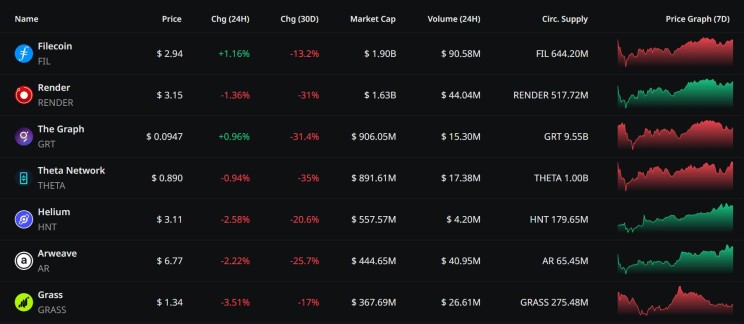
Filecoin Labs Render Token The Graph Theta Network Helium Arweave GetGrass.io is the TOP 7 DePIN Tokens this week Sergei Prudnikov
At Digital Asset Summit 2025 by Blockworks in NYC, Cathie Wood, Founder & CEO of ARK Investment Management LLC, highlighted how decentralized physical infrastructure networks (DePIN) are transforming industries. Helium
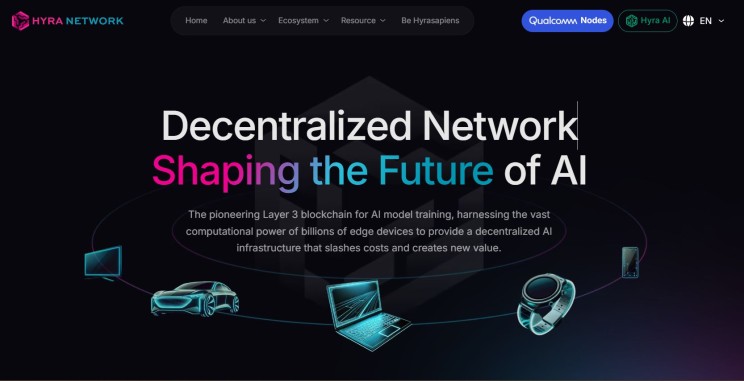
Hyra Network: Pioneering the World’s First Layer-3 Blockchain for AI and DePIN Hyra Network COINRS
Filecoin Foundation and io.net have partnered to let storage providers earn from unused GPU compute. Basem Oubah Gaurav Sharma Marta Belcher Clara Tsao
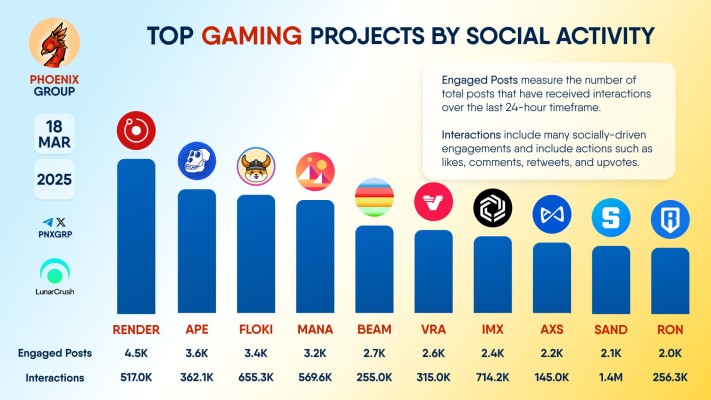
Render Token is a TOP GAMING PROJECT by social activity PhoenixGroup Aryan Mehta
DeFI (Decentralized Finance)
If you’ve ever applied for a loan, traded stocks, or sent an international payment, you’ve likely felt the inefficiencies of traditional finance — delays, high fees, and endless bureaucracy. But imagine a world where money moves instantly, loans are available 24/7, and trading doesn’t require approval from centralized entities.
That’s DeFi — a system that uses blockchain and smart contracts to remove intermediaries from banking, lending, and investing. Instead of banks deciding loan terms, DeFi platforms like MakerDAO and Aave allow users to borrow against collateral with no credit checks. Instead of centralized stock markets, DEXs like Uniswap let people trade assets without middlemen.
The beauty of DeFi is in its openness and accessibility. No need for a bank account — just an internet connection and a crypto wallet. No need to trust an institution — code enforces the rules, transparently and fairly.
Traditional finance is a closed system. DeFi is an open, permissionless network that anyone can use. And that’s exactly why it’s one of the biggest financial revolutions of our time.
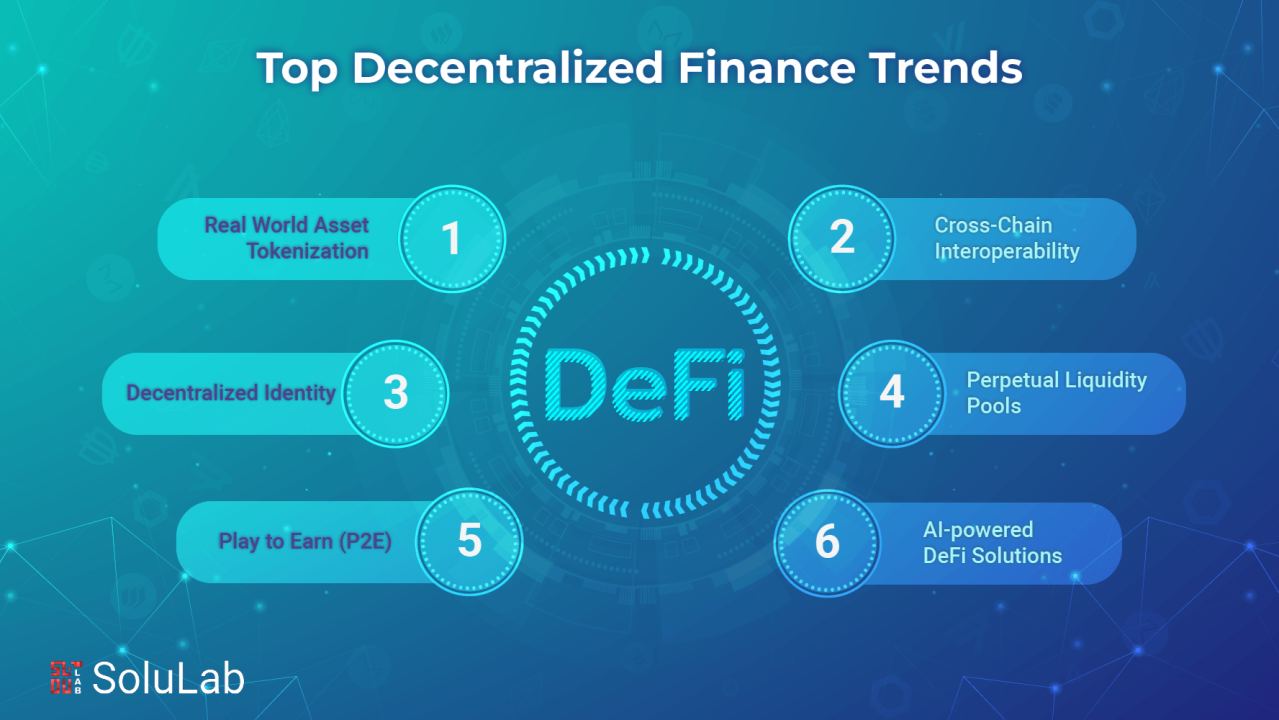
Top DeFi Trends You Should Know in 2025 SoluLab Maulik Lalani Rajat Lala
DeFi payments are reshaping how businesses transact—offering instant, borderless, and transparent payments without the need for traditional banks. ConsultiPay
Decentralized Finance (DeFi) is reshaping the global financial landscape by offering borderless, trustless, and permissionless financial services without intermediaries. From lending and borrowing to staking, liquidity provision, and yield farming, DeFi allows users to control their funds and earn yields, unlike traditional banking systems. Danish Khan
🚀 The DeFi Revolution: How Blockchain is Reshaping Global and Sri Lankan Banking! Ashwini Thivakaran
In today's edition, we explore the powerful synergy between Artificial Intelligence (AI) and Decentralized Finance (DeFi), a dynamic combination shaping the future of finance. Enock Orotomu
The shift from DeFi to ReFi is more than a trend — it’s a movement towards sustainable, regenerative banking. D4 Insight Deo Pasari
This blog compares traditional finance (Trad Fi) and decentralized finance (DeFi), highlighting DeFi's decentralized nature, transparency, and accessibility versus Trad Fi's centralized control and established systems. It discusses security risks, efficiency gains, and the potential for a future hybrid financial model. Pablo Más-Pope
🚀 Amana DeFi: Secure. Transparent. Fast. – The Future of DeFi 🚀 Amana DeFi Richard Jamieson
What is Stargate in Crypto? Stargate Protocol is revolutionizing cross-chain liquidity, enabling seamless native asset transfers without wrapped tokens. Jumper
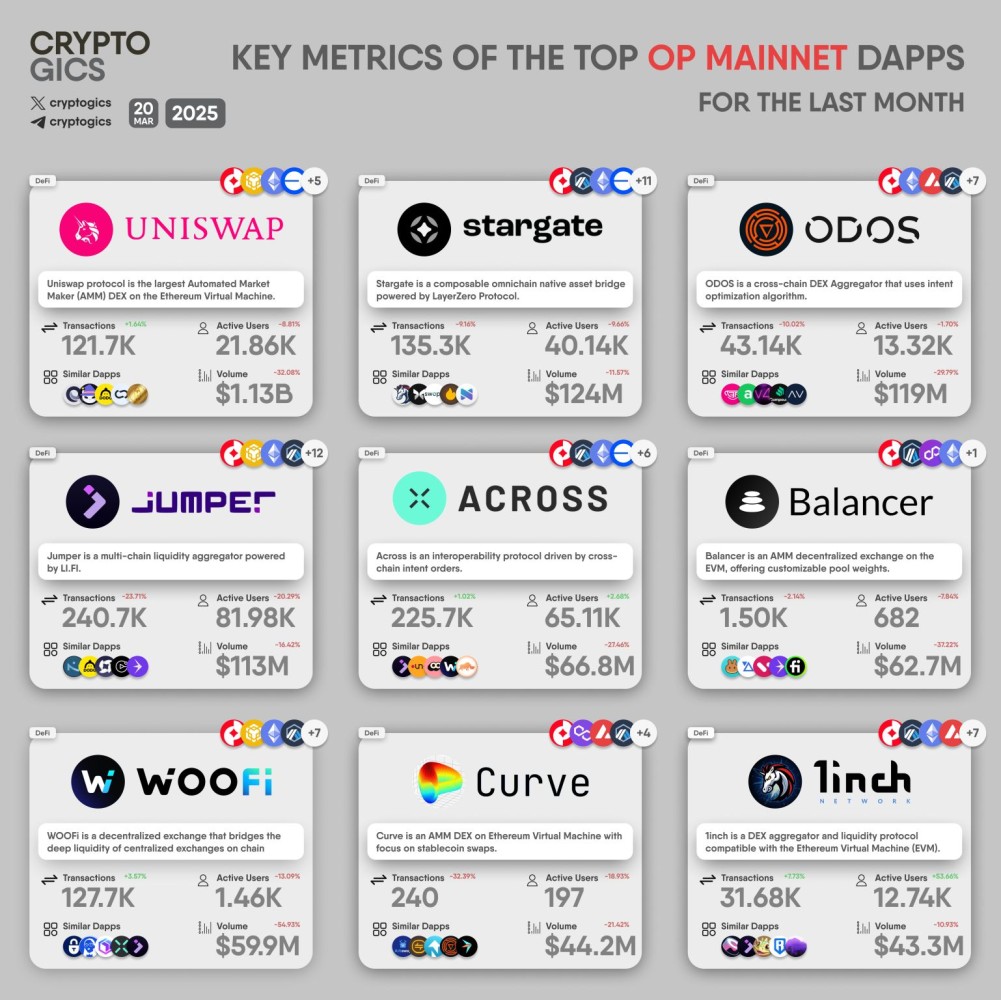
KEY METRICS OF THE TOP OPMAINNET DAPPS Cryptogics
Launching a campaign targeting Uniswap users? Our AI doesn’t stop there. It learns in real-time and recommends: Addressable.io Assaf Nadler Tomer S.
The latest cryptonews picked up by AI for March 17: OKX Suspends DEX Aggregator After Lazarus Hack Attempt, PancakeSwap DEX Leads the Way: CAKE Soars 16% as TVL Hits $1.62B and other by CryptoBeholder.com Oleh Bezuhlyi
🚨 Sushi Swap's $3.3M MEV Attack – What Happened & Lessons Learned 🚨 Morteza Khedri
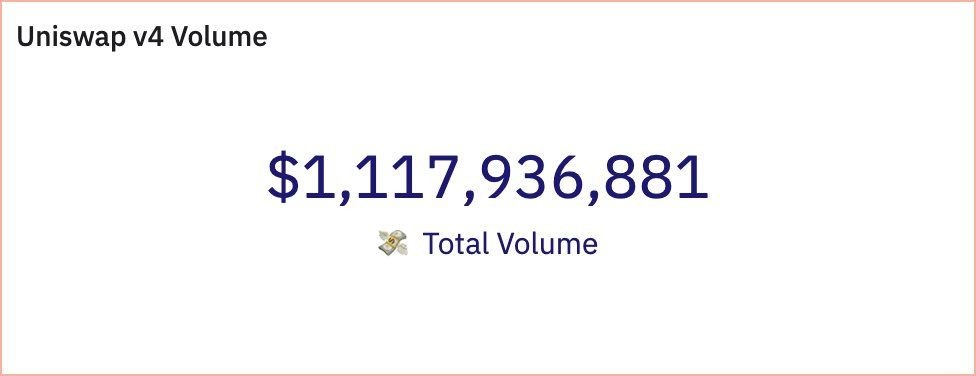
New milestone: Uniswap v4 just crossed $1B in all-time volume Uniswap Gun Clawvuthinan Sarina Siddhanti Daniel Kurka Data by Dune
“If you want real censorship-resistant L2, that’s Taiko Labs, that’s Based Rollups.” - Nicky Ch (Head of DeFi, Taiko Labs) 💫Nicky also dives into why Taiko Labs took the decentralized sequencer route and why DeFi projects are a perfect fit for Taiko. Ghan Vashishtha Zeeve
As we wrap up this edition of The Web3 Pulse, one thing is clear — decentralization is no longer just an idea; it’s a reality taking shape before our eyes. From DePIN creating user-owned infrastructure to DeFi redefining financial autonomy, the shift away from centralized control is accelerating.
This past week alone has shown groundbreaking developments across the Web3 landscape. Whether it's the latest DeFi innovations, on-chain governance breakthroughs, or the expansion of decentralized identity solutions, one thing is certain: Web3 is moving fast, and it’s moving toward greater autonomy for users.
But challenges remain — scalability, regulation, and adoption hurdles still need to be addressed. However, with momentum growing and builders doubling down, the decentralized future we’ve been envisioning is becoming more tangible each day.
Stay ahead, stay informed, and most importantly — stay decentralized.
See you in the next issue! 🚀
Disclaimer. This content is provided exclusively for informational and educational purposes. It does not constitute financial, investment, or legal advice. Beeezo does not endorse or recommend any particular investment strategies, purchases, or sales of digital assets. Always perform your own research and consult with professional advisors before making any financial decisions.